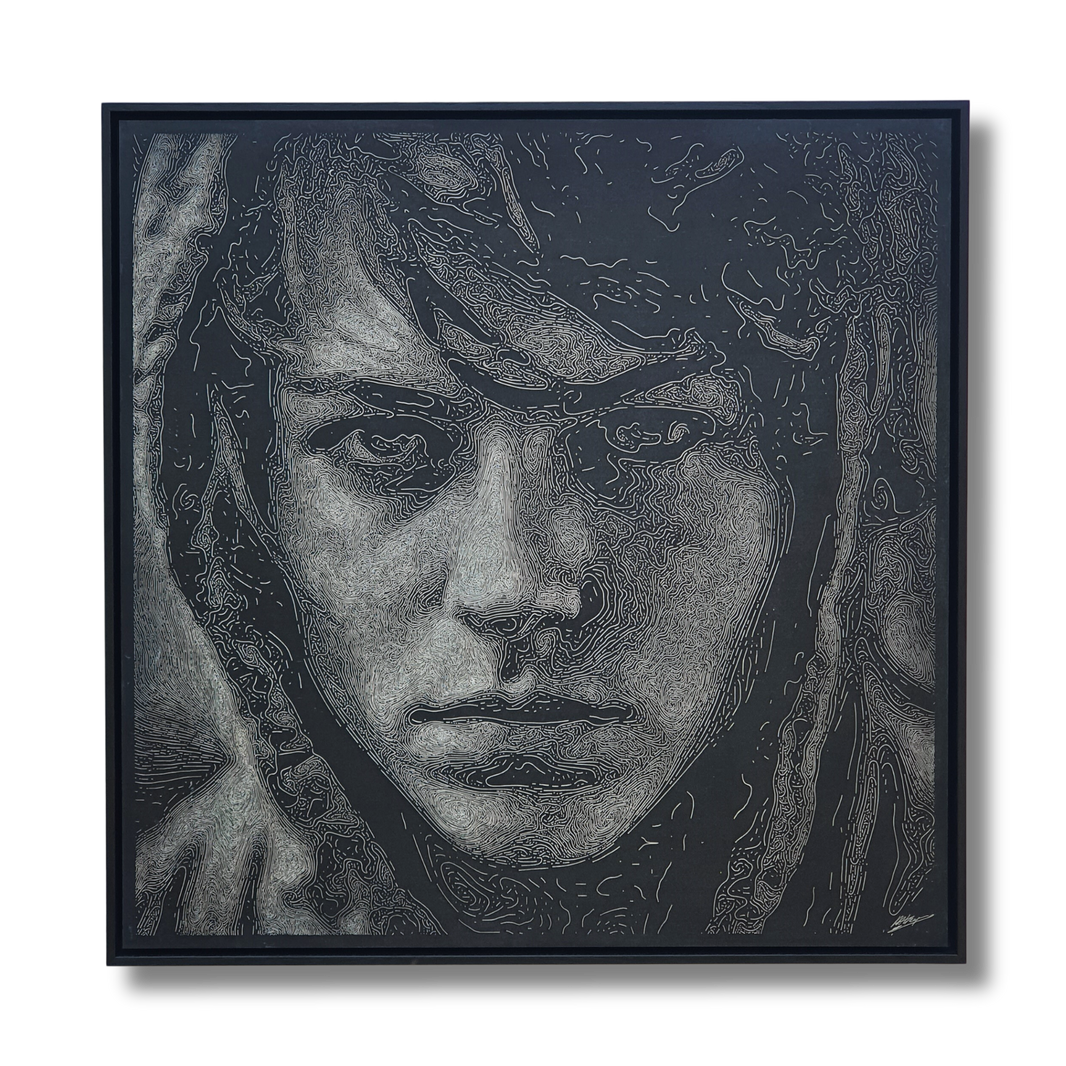
Collection: Wood Engravings
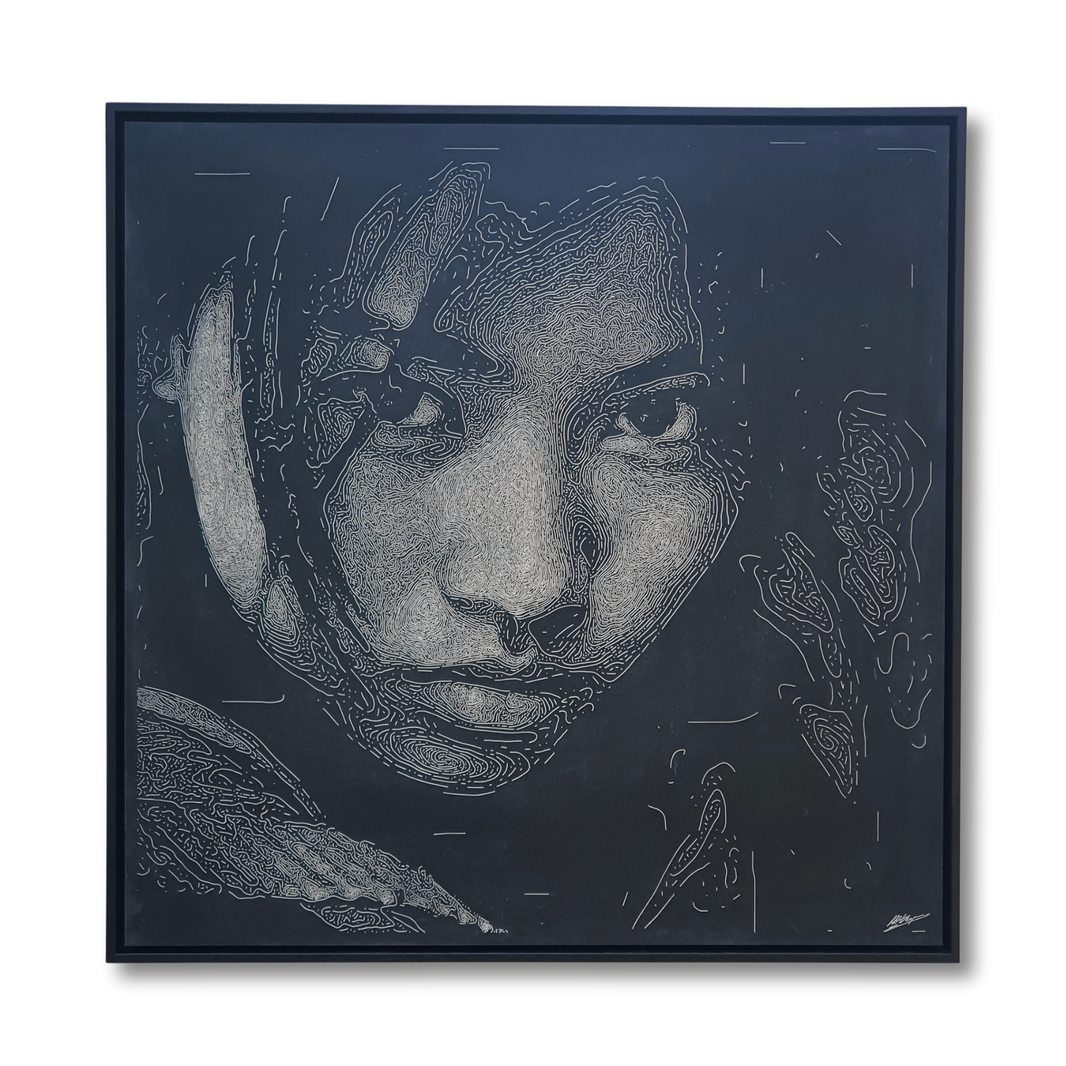
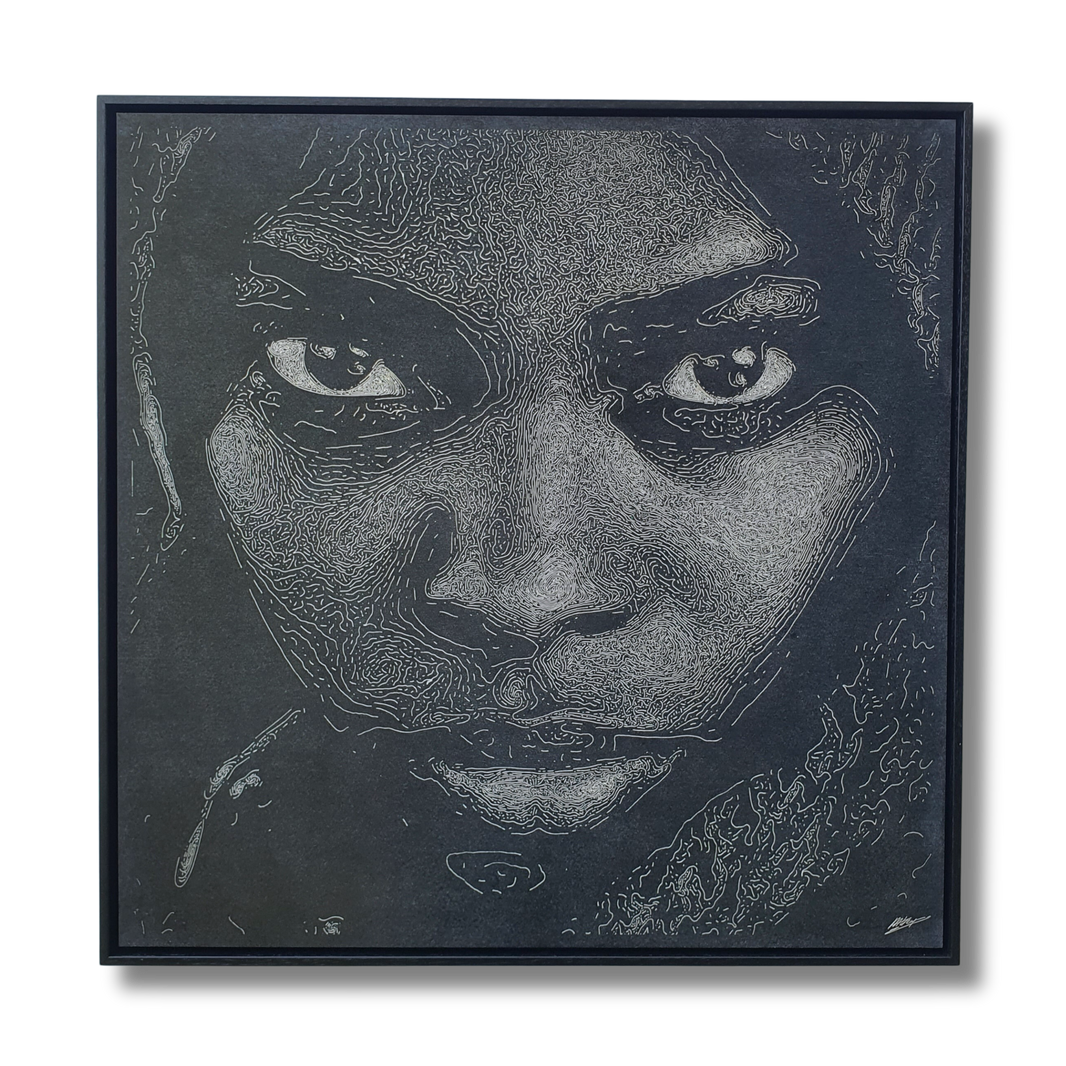
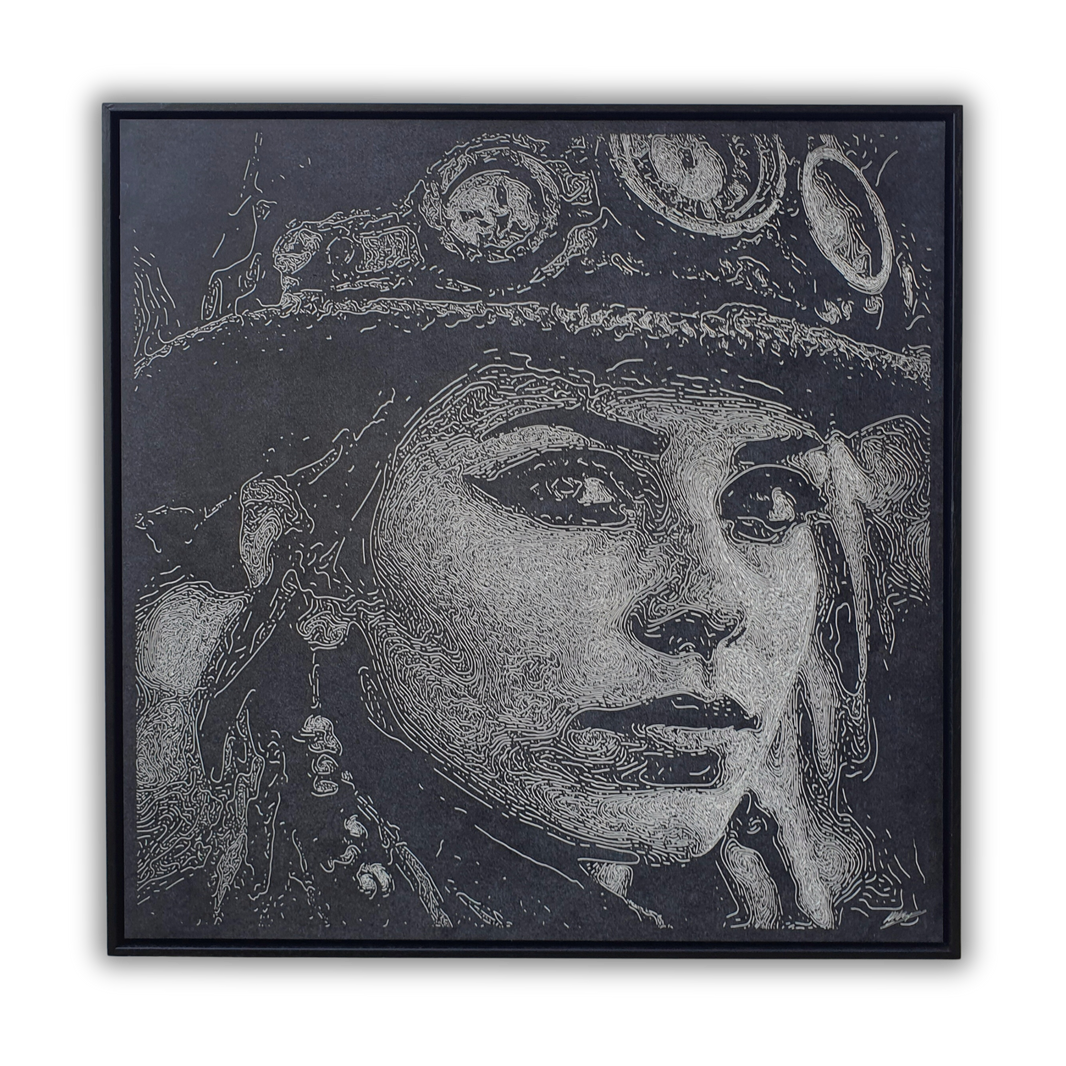
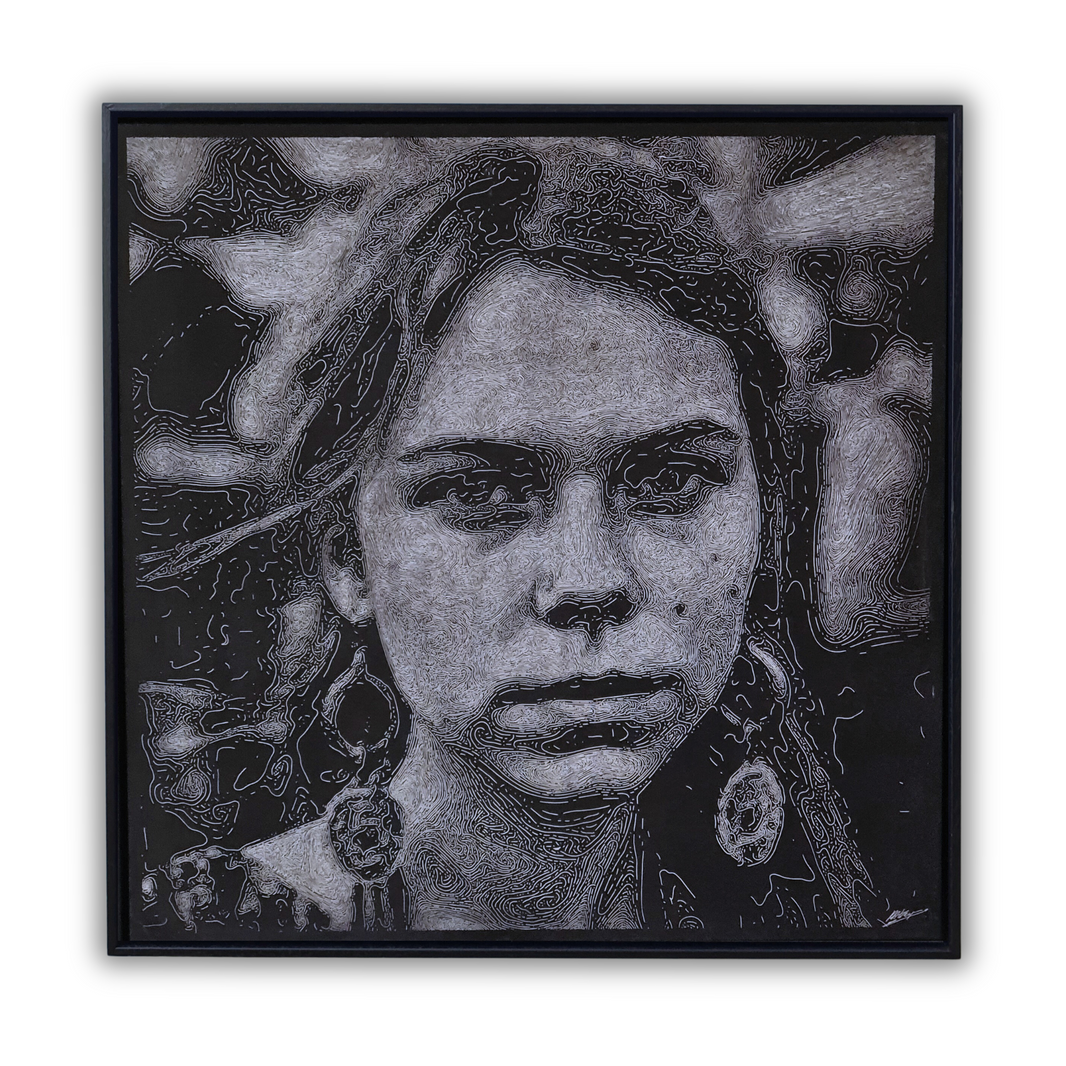
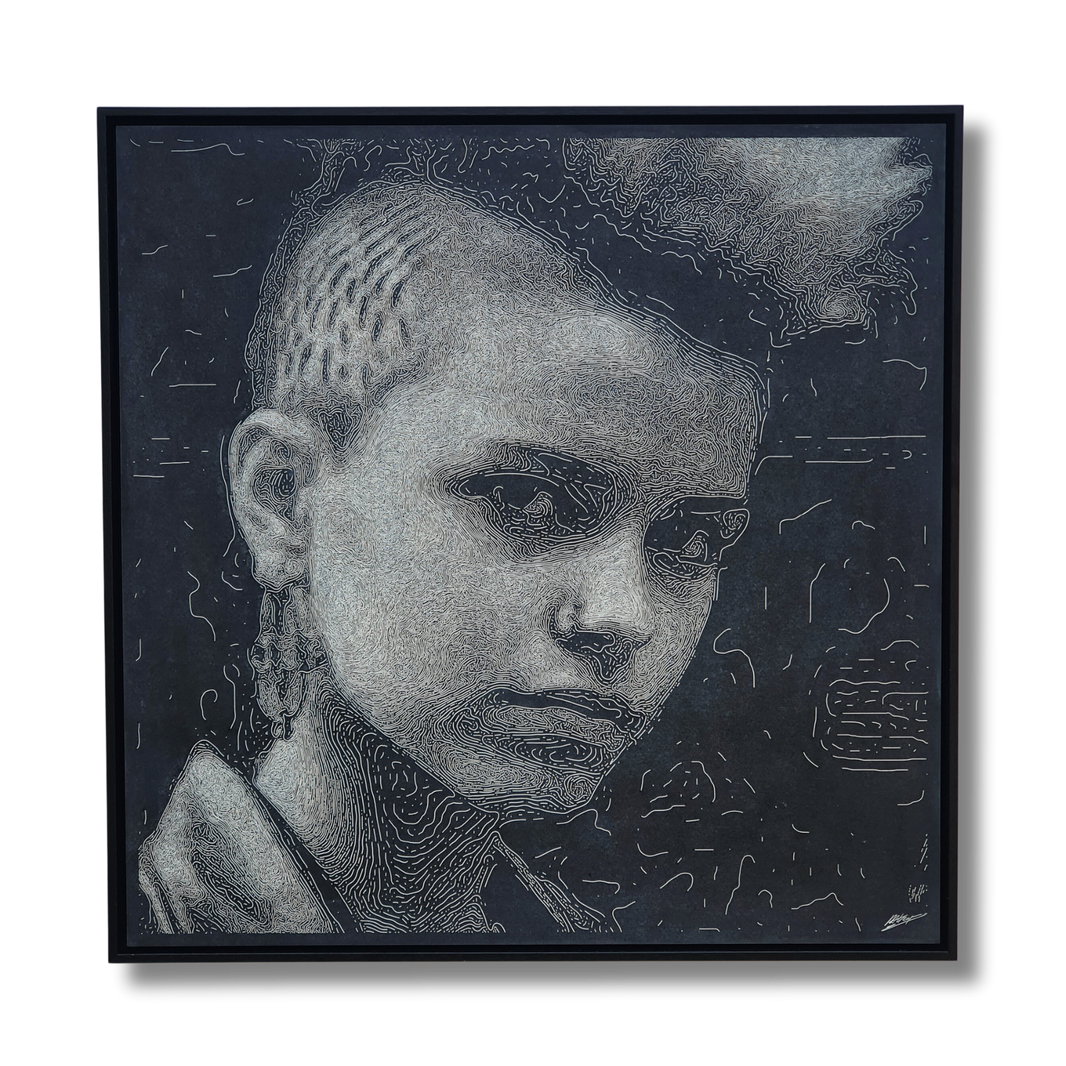
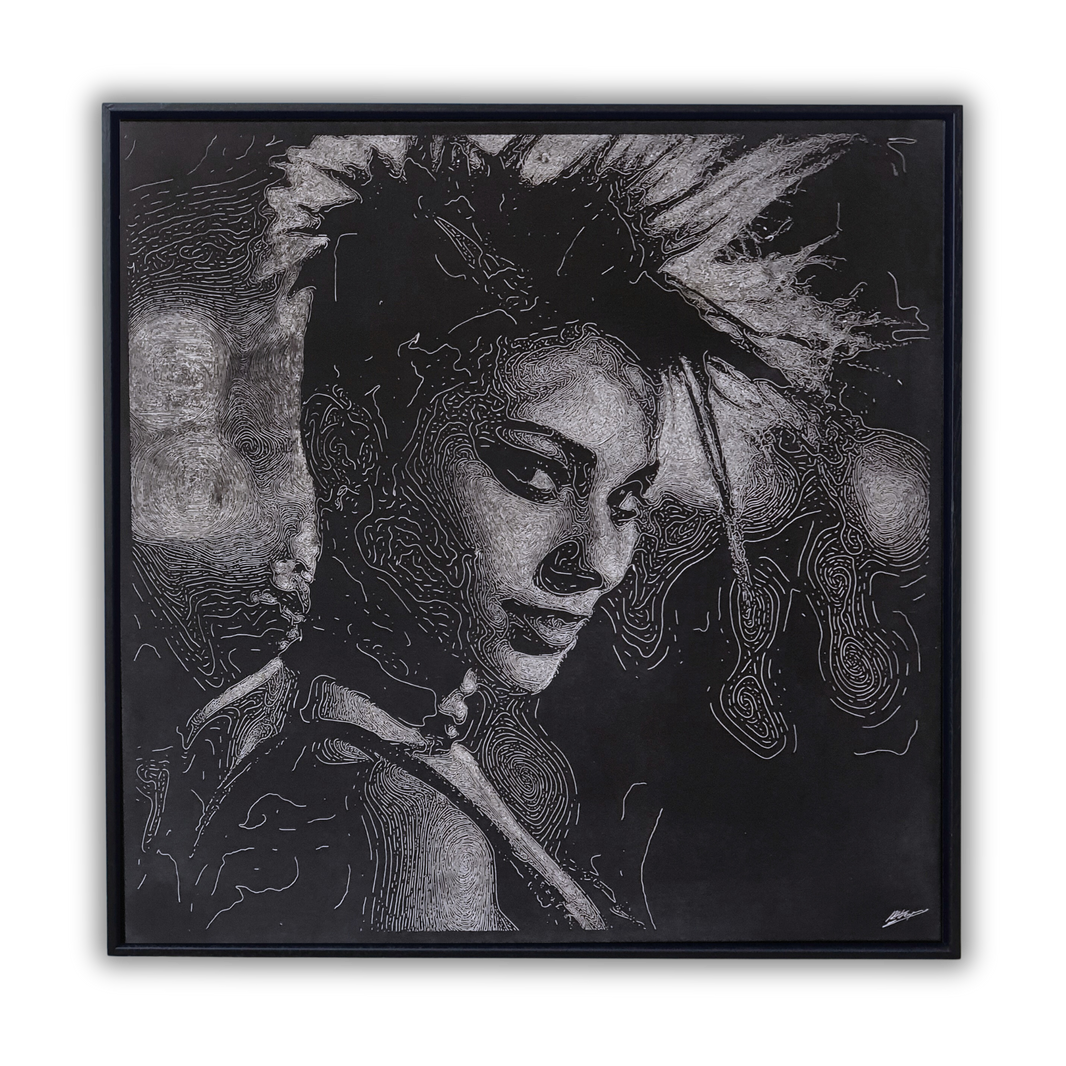
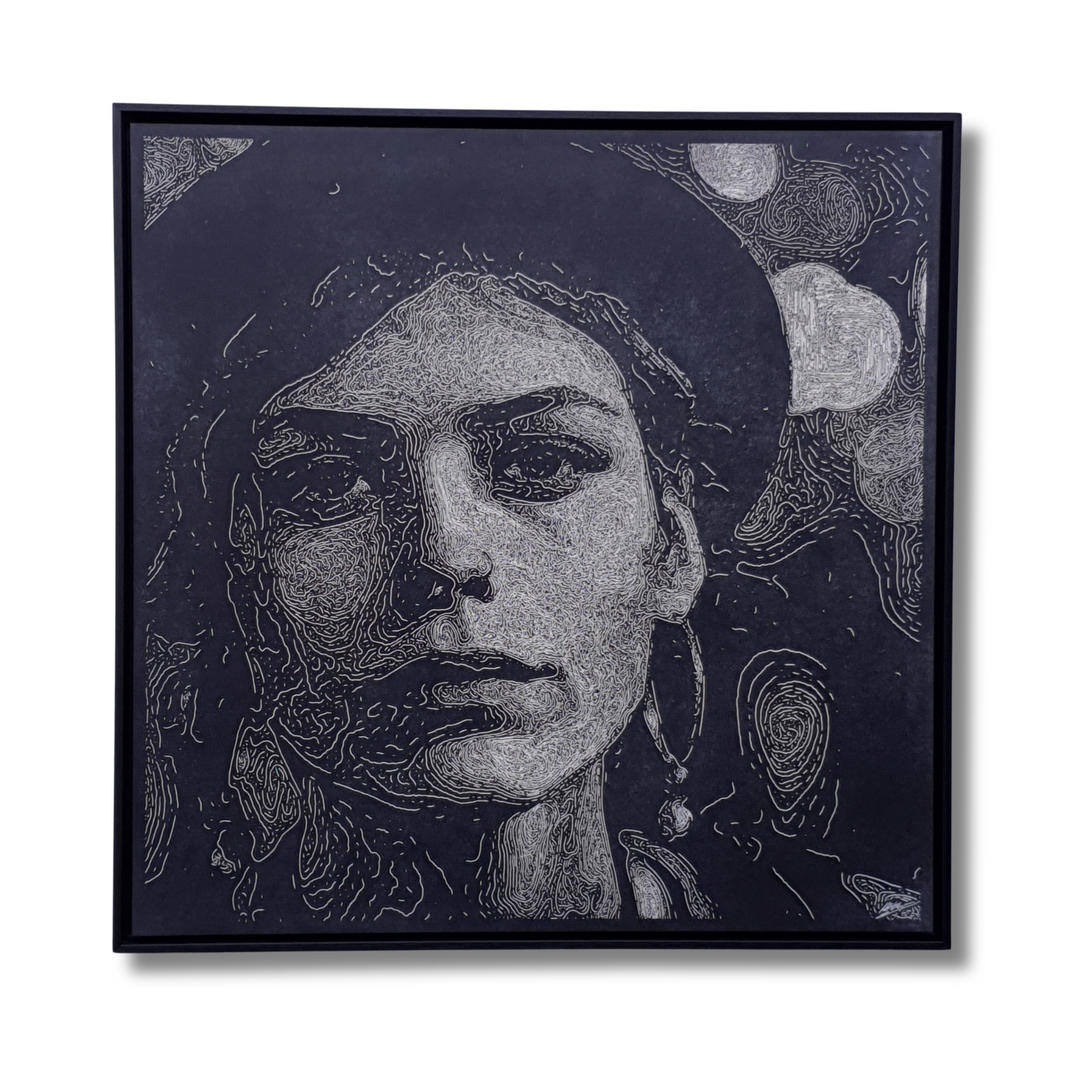
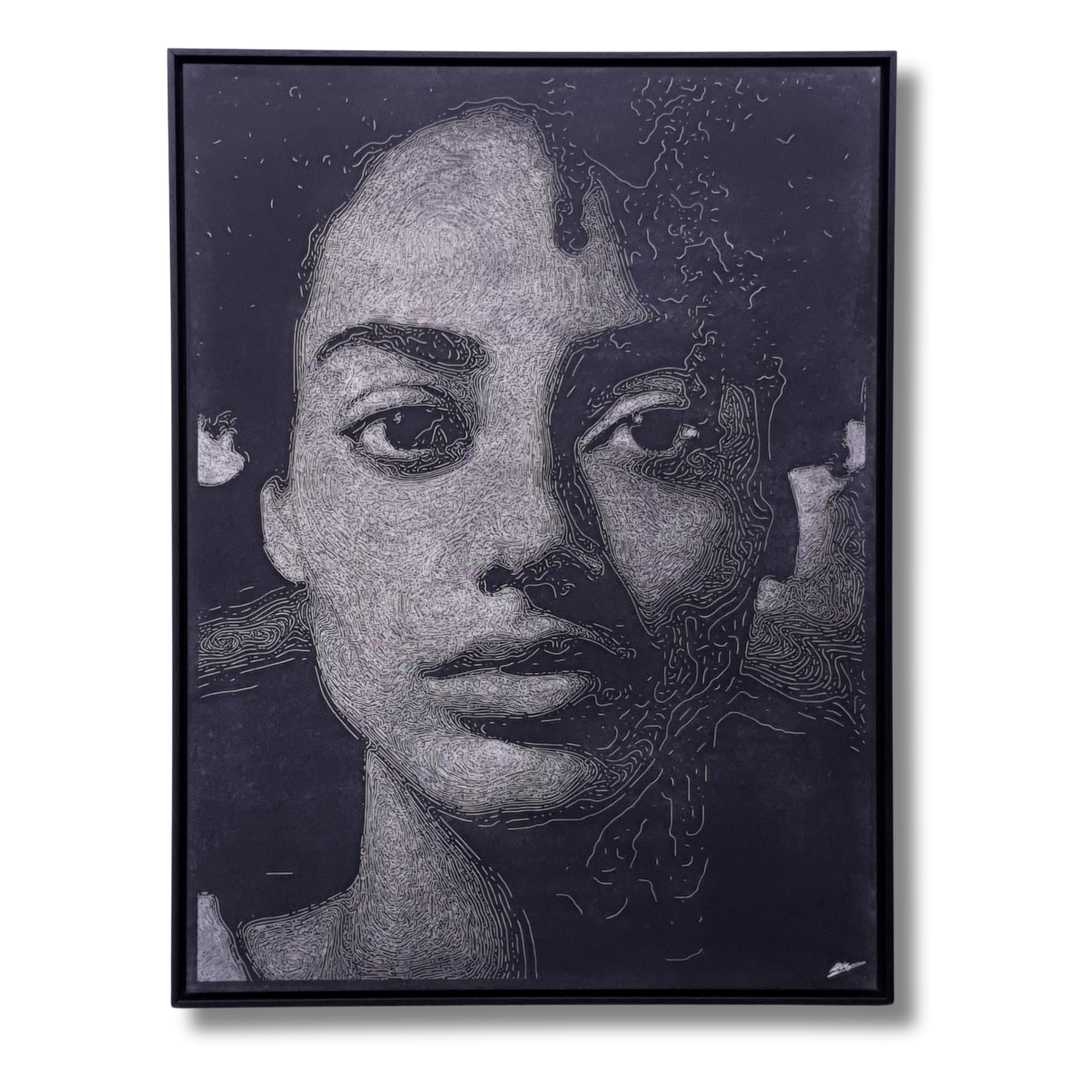
Wood engravings: I See You & Silent Streets
The technical process
Each work begins digitally but follows a unique path that combines techniques from different eras—from Renaissance pigment mixing to modern AI and game engines.
For "I See You," I use AI to generate hyperrealistic portraits of non-existent people based on text prompts. For "Silent Streets," I compose nighttime cityscapes in 3D game software—the same tools used to build virtual worlds, now used to create deserted streets and architecture.
These digital images are then translated into dense networks of lines by my own generative JavaScript code—a process that took months of development. The code analyzes each pixel and determines the density of the lines based on brightness: in bright areas, the lines are closer together, in dark areas, further apart. The direction of the lines follows the gradient of the image, similar to contour lines on a topographic map—though not exactly, more like an interpretation of light and shape. Even when I use the same base image, the algorithm always produces a different composition. 
The line drawing is engraved into black wood with a custom-built laser cutter—a modern precision technique that translates the digital code directly into the material. Black on black is subtle, almost invisible.

To bring the image to life, I revisit the methods of the old masters: I hand-mix oil paint from linseed oil and pure pigment powders and apply it to the engraved lines. The result is a richly textured relief that floats somewhere between a stone engraving and a digital fossil—an object that combines five centuries of techniques.

The collections
I See You explores the boundary between artificial and authentic. The portraits are hallucinations of neural networks, constructed from vast datasets and shaped by algorithms. Yet it's hard not to sense something human looking back. Up close, you see chaos—individual lines without clear meaning. But as you step back, everything falls into place, and a face appears. It's a metaphor for how AI functions: meaning only emerges by zooming out.
Silent Streets exudes loneliness and introspection. Deserted nighttime streets with only a single figure, captured in a moment of stillness. Up close, you see a tangle of abstract lines—the chaotic structures of a city. From a distance, a complete cityscape unfolds, evoked by virtual architecture but translated into tangible matter. These works invite reflection on isolation, connection, and our place in an ever-changing world.
Both collections play with the same tension: between abstraction and realism, between detail and overview, between digital and tangible. They invite you to get closer, to lose yourself in the detail—and then to step back and see something that looks back.
-
Not available
-
Not available